
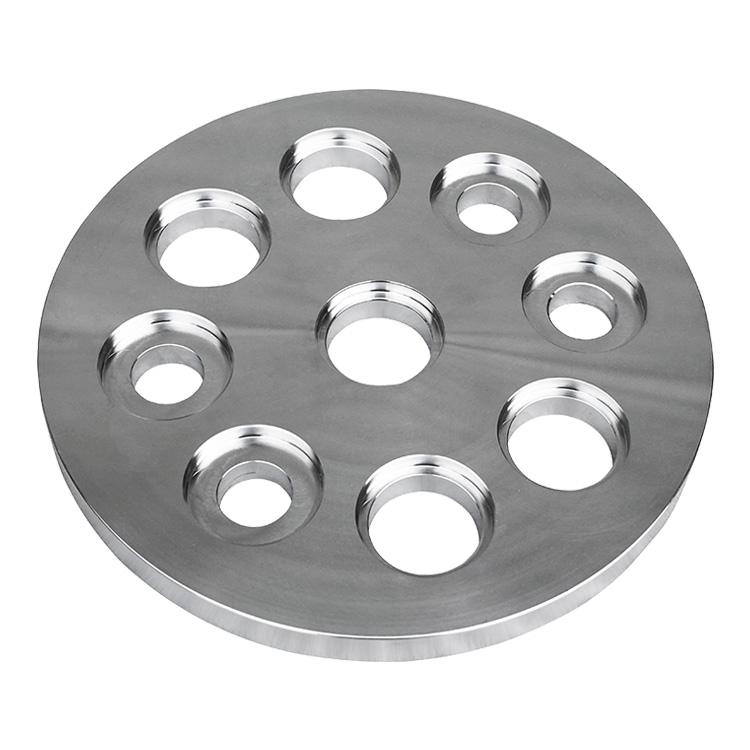
A Precision Standard Flange for Pipeline Assembly Systems is a critical connection component used to join pipes, valves, pumps, fittings, and other pipeline equipment in a safe, stable, and maintainable way. In modern industrial piping networks, precision flanges are valued for their accurate dimensional control, reliable sealing performance, and compatibility with standard pipeline assembly requirements. They are widely used in applications where leak resistance, assembly efficiency, pressure integrity, and long-term durability are essential.
This content provides a comprehensive, SEO-friendly overview of precision standard flanges, including definitions, functions, benefits, material options, common standards, technical specifications, selection factors, installation notes, and frequently used industry terminology. It is written for use in blog posts, category pages, product information pages, and industry knowledge sections.
A precision standard flange is a machined pipe connection element manufactured to meet strict dimensional tolerances and recognized industrial standards. In pipeline assembly systems, flanges are typically used in pairs and joined with bolts and a gasket to create a secure sealed connection. The “precision” aspect refers to improved concentricity, flatness, bolt-hole alignment, surface finish, and dimensional consistency. The “standard” aspect means the flange conforms to established specifications such as ASME, ANSI, DIN, EN, JIS, or other widely accepted piping standards.
Precision standard flanges are designed to support reliable pipe assembly across a wide range of fluid and gas transport systems. They are especially important in environments where pressure, temperature, corrosion, vibration, and maintenance accessibility must all be considered. Because pipeline assembly systems often require repeated disassembly for inspection or replacement, flanged joints remain one of the most practical connection methods in industrial engineering.
In pipeline assembly systems, even small dimensional deviations can cause misalignment, uneven gasket compression, leakage, bolt stress, and premature joint failure. Precision standard flanges help reduce these risks by ensuring that mating surfaces, bolt circles, bore sizes, and thicknesses are manufactured with consistency. This is particularly important in high-pressure lines, chemical transfer systems, steam service, water treatment plants, oil and gas pipelines, and process piping networks.
Precision also improves installation efficiency. When flanges are manufactured accurately, fit-up time decreases, installation errors are reduced, and maintenance teams can assemble pipeline joints with greater confidence. In large-scale systems, this can lead to lower labor costs, fewer shutdowns, and improved operational reliability.
Precision standard flanges provide multiple advantages in industrial piping and pipeline assembly applications. These benefits are one reason flanged joints remain widely used across engineering sectors.
| Advantage | Description | Pipeline Assembly Benefit |
|---|---|---|
| High dimensional accuracy | Manufactured with controlled tolerances for consistent fit | Improves alignment and reduces installation errors |
| Reliable sealing performance | Designed for proper gasket compression and contact stability | Helps reduce leakage risk |
| Easy maintenance | Bolt-connected joints can be dismantled and reassembled | Supports inspection, cleaning, and replacement |
| Wide standard compatibility | Available in common international standards | Integrates easily with existing pipeline systems |
| Strong mechanical performance | Suitable for demanding pressure and temperature conditions | Supports safe operation in industrial environments |
| Material flexibility | Can be manufactured from carbon steel, stainless steel, alloy steel, and more | Allows matching with service media and corrosion needs |
Precision standard flanges come in several types, each suited to specific pipeline assembly needs. The most common designs differ in how they connect to the pipe, how they distribute stress, and how they perform under pressure and thermal load.
| Flange Type | Typical Use | Key Feature |
|---|---|---|
| Weld Neck Flange | High-pressure and high-temperature piping | Long tapered hub provides strong stress transfer |
| Slip-On Flange | General-purpose pipeline systems | Slides over pipe and is welded in place |
| Blind Flange | Closing the end of a pipeline or vessel opening | No central bore; used to seal pipe ends |
| Threaded Flange | Low-weld or no-weld installations | Internal threads allow pipe connection without welding |
| Socket Weld Flange | Small-diameter high-pressure lines | Pipe inserts into socket before welding |
| Lap Joint Flange | Systems requiring frequent disassembly | Used with a stub end for easy alignment |
| Orifice Flange | Flow measurement assemblies | Supports differential pressure measurement |
Material selection is one of the most important decisions when choosing a precision standard flange for pipeline assembly systems. The right material affects strength, corrosion resistance, temperature resistance, weldability, and service life.
| Material | Properties | Typical Applications |
|---|---|---|
| Carbon Steel | Strong, economical, widely available | Water, oil, gas, general industrial piping |
| Stainless Steel | Corrosion-resistant, durable, hygienic | Chemical processing, food, pharma, marine service |
| Alloy Steel | Improved strength and heat resistance | High-temperature and high-pressure systems |
| Duplex Stainless Steel | High strength and strong chloride resistance | Offshore, desalination, chemical environments |
| Nickel Alloys | Excellent resistance to aggressive media | Corrosive chemical and high-performance systems |
| Cast Iron / Ductile Iron | Used in selected utility systems | Low to moderate pressure water applications |
Precision standard flanges are commonly manufactured according to international and regional piping standards. These standards define dimensions, pressure ratings, facing types, tolerances, and testing requirements. Choosing the correct standard is essential for compatibility and safe operation in pipeline assembly systems.
| Standard | Region / System | Common Use |
|---|---|---|
| ASME B16.5 | North America / global industrial use | Pipe flanges and flanged fittings up to specified sizes and pressure classes |
| ASME B16.47 | Large diameter piping | Large flanges for heavy industrial systems |
| DIN | Europe and international projects | Metric-based flange dimensions and pressure classes |
| EN 1092 | European standard | General flange dimensions and rating systems |
| JIS | Japan and Asian industrial systems | Metric flanges with specific rating conventions |
| GB / Chinese Standards | China and related industrial projects | Piping and vessel flange applications |
When evaluating a precision standard flange for pipeline assembly systems, engineers and procurement teams usually review a set of technical parameters. These parameters affect compatibility, sealing performance, load handling, and operating safety.
| Parameter | Meaning | Why It Matters |
|---|---|---|
| Nominal Pipe Size (NPS) / DN | Indicates the pipe size the flange fits | Ensures proper system compatibility |
| Pressure Rating | Defines maximum allowable pressure class | Supports safe operation under service pressure |
| Facing Type | Describes gasket seating surface | Influences sealing quality and gasket selection |
| Bolt Hole Pattern | Number, diameter, and spacing of bolt holes | Ensures alignment and secure bolting |
| Flange Thickness | Overall body thickness | Contributes to pressure resistance and rigidity |
| Hub Design | Shape of the transition between pipe and flange face | Affects stress distribution and welding performance |
| Surface Finish | Roughness and flatness of the sealing face | Influences gasket performance and leak resistance |
| Tolerance | Allowed dimensional variation | Controls precision and interchangeability |
Precision standard flanges are often categorized by pressure class or rating. These ratings indicate the flange’s suitability for certain operating conditions. The exact pressure capacity depends on material, temperature, flange standard, and system design. In pipeline assembly systems, pressure rating must always match the service requirements.
Common pressure classes in some standards include Class 150, Class 300, Class 600, Class 900, Class 1500, and Class 2500. Metric standards may use PN ratings such as PN6, PN10, PN16, PN25, PN40, and higher values. Higher ratings are typically used in more demanding services, while lower ratings are often used in utility and general process applications.
The flange face is the sealing surface that contacts the gasket. The facing type plays a major role in joint performance. Precision standard flanges are commonly supplied with several facing styles depending on service conditions and sealing requirements.
| Facing Type | Description | Typical Use |
|---|---|---|
| Raised Face (RF) | Sealing face is slightly raised above the bolt circle | Most common general industrial flange design |
| Flat Face (FF) | Entire face is flat and level | Used with cast iron and low-pressure systems |
| Ring Type Joint (RTJ) | Grooved face for metal ring gasket | High-pressure and critical sealing applications |
| Tongue and Groove | Matching male/female surfaces improve gasket containment | Specialized process systems |
| Male and Female | Interlocking faces improve alignment | Used in selected industrial assemblies |
Precision standard flanges are used in a wide range of pipeline assembly systems across many industries. Their adaptability, serviceability, and standard compatibility make them a preferred connection method in numerous engineering projects.
Reliability in pipeline assembly systems depends on more than just material strength. Joints must remain stable under vibration, temperature cycling, pressure fluctuation, and environmental exposure. Precision standard flanges improve reliability by supporting accurate mating geometry and consistent load distribution across the gasket face and bolt pattern.
Properly manufactured flanges help reduce uneven tightening, gasket extrusion, and stress concentration. They also support repeatable assembly results, which is important when systems are serviced regularly or when multiple installation teams work on the same project. In large industrial facilities, consistent flange quality can contribute to safer operation and lower lifecycle costs.
Choosing the right precision standard flange requires attention to both operational and installation requirements. The following factors are commonly reviewed during design and procurement.
Correct installation is essential for achieving the intended performance of a precision standard flange. Even high-quality components can underperform if assembly procedures are not followed properly. In pipeline assembly systems, flange installation should always emphasize cleanliness, alignment, torque control, and gasket integrity.
Quality control is an important part of manufacturing and using precision standard flanges. Common inspection points help ensure the flange will perform correctly in pipeline assembly systems.
| Inspection Item | Purpose | Typical Concern |
|---|---|---|
| Dimensional check | Verifies conformity with standard dimensions | Incorrect bolt circle, thickness, or bore size |
| Surface finish inspection | Confirms sealing face quality | Roughness or scratches affecting sealing |
| Material verification | Confirms correct alloy or steel grade | Wrong material selection or substitution |
| Visual inspection | Detects cracks, dents, and defects | Mechanical damage during handling |
| Pressure testing | Confirms joint integrity in service conditions | Leakage or insufficient seal performance |
| Hardness / mechanical testing | Evaluates strength and performance consistency | Improper heat treatment or material behavior |
In many pipeline assembly systems, standard flanges are preferred over welded-only or permanently fixed connections because they offer practical service advantages. They are easier to inspect, modify, replace, and maintain. They also provide a flexible solution for systems that may require future expansion or reconfiguration.
Compared with some alternative connection methods, flanged joints are especially useful when equipment must be removed periodically. This makes them common in pumps, heat exchangers, valves, meters, and large process components. Precision standard flanges improve these benefits by delivering a higher level of fit and repeatability.
The following keyword phrases are commonly associated with this topic and can help support search visibility when used naturally within page content:
Understanding common flange terminology can help readers, buyers, and engineers compare products more effectively.
| Term | Meaning |
|---|---|
| Flange Face | The sealing surface where the gasket is placed |
| Bolt Circle | The circle on which the bolt holes are positioned |
| Gasket | Sealing element placed between two flange faces |
| Pressure Rating | Maximum service pressure classification for the flange |
| Nominal Diameter | Standardized pipe size reference |
| Facing | Type of surface design used to support sealing |
| Hub | Tapered or reinforced section connecting flange body to pipe |
| Flange Joint | Connection formed by two flanges, bolts, and a gasket |
A Precision Standard Flange for Pipeline Assembly Systems is a vital component for creating strong, leak-resistant, and maintainable pipe connections. Its value comes from dimensional accuracy, standardized compatibility, material flexibility, and dependable sealing performance. Whether used in industrial processing, utility piping, energy systems, or large-scale infrastructure, precision standard flanges remain one of the most important elements in modern pipeline assembly.
For content creators and website owners, this topic offers strong SEO potential because it combines high-intent industrial keywords with evergreen technical information, useful tables, and clear structure. Pages built around precision standard flange, pipeline assembly systems, flange standards, and pipe connection components can perform well in search when supported by original, well-organized content.


Urheberrecht © 2022 Zhejiang Songlin Flange Co., Ltd.
SitemapDiese Website verwendet Cookies, um sicherzustellen, dass Sie das beste Erlebnis auf unserer Website erhalten.

 English
 Español
 Pусский
 Français
 日本語
日本語 한국어
한국어 العربية
 Italiano
 Nederlands



 WhatsApp
 Telefon
Kommentar
(0)